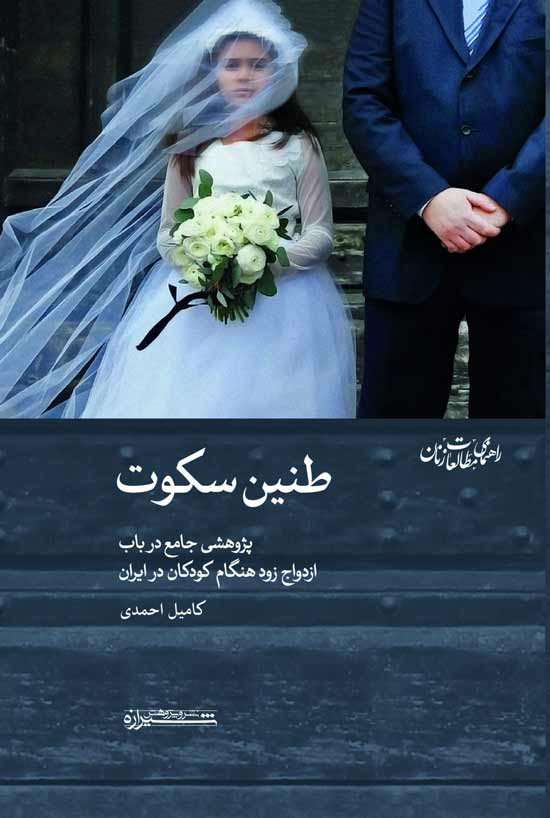
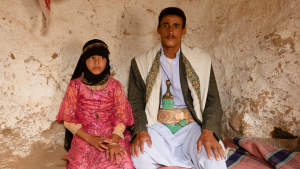
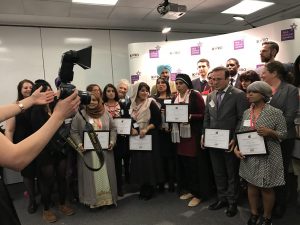
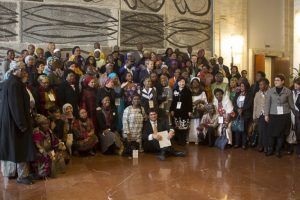
An Echo of Silence, by Kameel Ahmady and colleagues, examines the social and cultural circumstances of child marriage in Iran. It asks how inequality, family expectations, religious and cultural norms, and gaps in protection can restrict children’s choices, education and futures.
The study grew out of the team’s earlier research on female genital mutilation/cutting. It treats child marriage as a subject requiring its own fieldwork and attention to the experiences of children and families.
Research scope and methods
The book’s introduction describes a two-year study in seven provinces: Khorasan Razavi, East Azerbaijan, Khuzestan, Sistan and Baluchistan, West Azerbaijan, Hormozgan and Isfahan. Official registration statistics informed the selection of research areas.
The methodology chapter describes an approach centred on qualitative fieldwork, including semi-structured interviews, with questionnaires adapted to local settings. It explains how towns, villages and interview numbers were selected and adjusted in response to practical conditions. These methods should be examined alongside the findings rather than treating the study as a nationally representative survey.
The publication year of an edition is distinct from the period of its fieldwork. Check the methods and source dates in the edition you are reading before comparing its findings with another study.
How the book is organised
The English research PDF is arranged in four main chapters:
Definitions, background and the organisation of the study.
Legal, religious and sociological contexts.
Survey findings and accounts from the seven provinces.
Conclusions, possible responses and recommendations.
Page numbers and presentation differ between editions. Use the contents in your selected PDF to find a passage.
Themes and interpretation
The book examines how social expectations and unequal power can shape decisions about children’s marriages. Its critical focus includes children’s ability to express their wishes, continue education and obtain support. The author connects the research with public debate and calls for reform; that connection does not establish that a particular legal change was enacted or implemented.
For a broader definition, UNICEF describes child marriage as a formal marriage or informal union involving someone under 18, whether the other person is an adult or another child. This international definition should be distinguished from the details of domestic law.
UNICEF reports that girls are disproportionately affected and that marriage before 18 is associated with less schooling and greater exposure to domestic violence. Such patterns do not determine every individual’s experience. Physical development alone does not settle questions of age, free consent, education or protection.
How to read the statistics
Check the year, source, age range, unit of measurement and denominator for every figure. A count of registered marriages, a percentage of marriages involving a particular age group and the number of people married in childhood measure different things.
Official registration data do not, by themselves, establish the number of unregistered unions. Some tables use a 15–19 age band, which also includes people aged 18 and 19; that group should not be treated as identical to children under 18. Historical figures and archived news headlines on this page are not current estimates.
Editions, languages and further reading
The downloads above include English research material, a Farsi summary, an English Avaye Buf edition dated 2021 and an English LAP LAMBERT edition dated 2022. Check the title and imprint inside each file when citing it.
It examines child marriage in Iran, focusing on social and cultural conditions, inequality and children’s experiences.
Does the study represent all of Iran?
The fieldwork covers selected areas in seven provinces. Its methods and sample should be considered before extending its findings to other populations.
Are all downloads full English editions?
No. One file is a Farsi research summary. The English files represent different versions or editions, as indicated in their labels.
Where can I find the research methods and recommendations?
Consult the methods section and concluding chapter in the edition you choose. The linked PDFs include contents pages to help you navigate.
Read these reports in the context of their original publication dates. Their headlines and figures do not establish current statistics or the present legal position.
Essential cookies are active for the website to work. Visitor statistics and external content such as YouTube depend on your choice. You can accept or reject optional cookies, or choose your settings. You can change your choice through “Cookie settings”.
Essential
Always active
Essential storage needed to provide services and remember your cookie choice is always active.
Preferences
The technical storage or access is necessary for the legitimate purpose of storing preferences that are not requested by the subscriber or user.
Visitor statistics
This option allows Google Analytics to measure visits and use of the website.The technical storage or access that is used exclusively for anonymous statistical purposes. Without a subpoena, voluntary compliance on the part of your Internet Service Provider, or additional records from a third party, information stored or retrieved for this purpose alone cannot usually be used to identify you.
External content
This option allows external content such as YouTube to load. These services process information under their own policies.

 Farsi (فارسی)
 Kurdish (کُردی)