
 Farsi (فارسی)
 Kurdish (کُردی)
Violence Against Men
This book seeks to reconsider one of the less explored dimensions of contemporary social issues: the experiences, vulnerabilities, and challenges faced by men and boys in relation to violence, inequality, and social harm. Through a systematic and analytical approach, it critically examines prevailing stereotypes surrounding masculinity and gender roles, offering a more nuanced understanding of men’s positions and experiences within society.
In many dominant narratives, men are primarily portrayed as holders of power or perpetrators of violence. Social reality, however, is far more complex than such a one-dimensional representation suggests. Men and boys may themselves experience various forms of pressure, violence, deprivation, and vulnerability as a result of social, cultural, and economic structures, as well as expectations surrounding what it means to “be a man.” Many of these experiences remain overlooked, unheard, or insufficiently acknowledged.
Addressing these issues does not mean denying, minimizing, or diminishing the serious and complex reality of violence against women, nor does this book seek to place the concerns of women and men in opposition to one another. Instead, it proceeds from the understanding that a more comprehensive analysis of violence and inequality requires space for the experiences and vulnerabilities of all social groups to be recognized and examined.
From this perspective, the book invites readers to move beyond simplistic gender binaries and the competition of suffering, toward a broader and more inclusive understanding of gender. Recognizing the vulnerabilities of men and boys, alongside the discrimination and violence experienced by women, can help reveal another important part of the complex social landscape of violence and inequality.
Ultimately, the book aims to contribute to a broader academic and social dialogue and to encourage movement toward genuine and inclusive gender justice—a form of justice in which safety, dignity, and freedom from violence are not privileges associated with any particular gender or group, but fundamental rights shared by all human beings.
search
Articles
Echo of silenceThe phenomenon of temporary marriage (‘TM’) and its role in promoting early child marriage (‘ECM’) in IranThe phenomenon of early child marriage and analyses in Iran ( conference presentation)The Role of Temporary Marriage (TM) in Promoting Early Child Marriage (ECM) in Iran – Book Chapter (Temporary and Child Marriages in Iran and Afghanistan) Chapter 3 (P 63-84)Feminization of Poverty -The Cause and Consequence of Early Childhood Marriages in IranThe Nexus between the Temporary Marriage and Early Child Marriages
Related Content
The Continuation of Child Marriage in the Middle EastCauses of child marriageComplex Causes of Child Marriage in Iran and other Islamic countriesThe IKWRO Award at the University of LawWhat are the effects of child marriage in adulthood?Rethinking Marriage Laws in IranGlobal P.E.A.C.E. Foundation Literature and Humanities PrizeInter-African Committee
Introduction
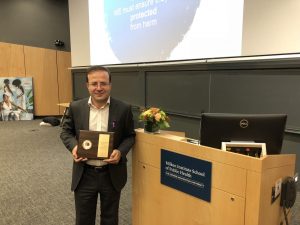
Kameel Ahmady is a British-Iranian researcher working in the field of social anthropology, with a particular focus on gender, children, ethnic minorities, and child labour. Kameel was born in Iranian Kurdistan (also known as East Kurdistan). He obtained his Master’s degree in Social Anthropology and Visual Ethnography from the University of Kent, UK. His academic pursuits include specialized courses in Middle Eastern Politics and Research Methods from other British institutions. Known for studying harmful traditions, Ahmady serves as both a supervisor and developer for his teamwork research publications in Farsi, Kurdish, and English. In 2017, he was honoured with “Honour” prize by the UK based IKWRO organization at the University of Law in London. Subsequently, in 2018, at George Washington University, Global P.E.A.C.E. foundation bestowed upon him the “Literature and Humanities” award in recognition of his contributions to the field. Among his group works are titles such as ” Conformity and Resistance in Mahabad,” ” Another Look at East and Southeast of Turkey,” “In the Name of Tradition,” “A House on Water,” “The Echo of Silence,” ” Traces of Exploitation in Childhood,” and more….
Articles



Related Content




FAQ About Violence Against Men
- What is the effect of having a concubine in Iran on the child of a married woman? In Iran, the concept of concubinage is not legally recognized or accepted within the framework of marriage. The Iranian legal system follows Islamic law, which prohibits engaging in concubinage or having a concubine. Therefore, the impact of having a concubine on the child of a married woman would not be applicable in the legal context of Iran. It’s important to note that Islamic teachings emphasise the importance of maintaining the sanctity of marriage and discouraging any form of extramarital relationships. In the event that a child is born outside of a legally recognized marriage, it may have social and cultural implications, as it deviates from societal norms and expectations. Overall, the legal and social context in Iran does not endorse or recognize concubinage, and any discussion regarding the impact on the child would be outside the legal framework and societal norms.
- What are the consequences of child marriage? Marrying at a young age has adverse effects on the psychological development of children, especially girls. Most of the child spouses have a weak socio-economic origin and the marriage bond is a transaction between them for the families to manage and eliminate a ‘bread-eating’ member of the family through such measures as asking the man to pay for the girl and their minimum financial support is realized. Marrying at a young age has consequences such as the following: dropping out of school, shortening the childhood period, bearing the burden of marriage at a young age with minimal experience, getting involved in everyday tensions as a result of the lack of emotional maturity and lack of interaction skills, remaining under the involvement of others, lack of experience for the responsibility of motherhood, the possibility of experiencing sexual violence, early pregnancy, death during childbirth due to lack of biological development, despair and hopelessness due to the dominance of others over life affairs, the regret of the parties after gaining a better understanding of each other and the social world, becoming a widow at an early age, and many others.
- What are the solutions to prevent child marriage in Iran? Changing the legal age of marriage to 18 years, amending the laws of temporary marriage, cultural and educational measures and enlightenment, mandatory and accurate registration of marriages, serious accountability of the government and coordination of related organizations to deal with child marriage, compulsory and free education especially in deprived areas, increasing awareness of the consequences and harms of child marriage through mass media and communication technologies, judicial and legal support from the judiciary to outlaw child marriage and determine heavy punishments for its practitioners, and finally using spiritual and religious figures as the most influential missionaries of social changes in this field.