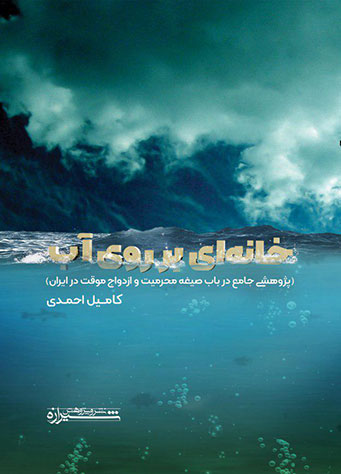
A House on Water, by Kameel Ahmady and colleagues, examines temporary marriage and sigheh mahramiat in Iran. It explores how cultural and religious expectations, unequal power and access to support shape the experiences of women and children.
The research asks how recognition of a relationship relates to the security and choices of those involved. Its focus extends beyond arguments about moral approval to questions about everyday life, dependence and people’s ability to seek protection.
Research scope and methods
The study examines Tehran, Mashhad and Isfahan. The English research file describes in-depth interviews and the use of grounded theory to analyse the material. Read its methods chapter alongside the findings to understand the participants, recruitment and conditions of the research.
A study in three cities does not, by itself, establish national prevalence or the views of everyone in Iran. Edition publication dates also differ from fieldwork dates. Comparisons with other research should take account of the setting, period and sample.
How the book is organised
The linked English research PDF has four main chapters covering the background to marriage; historical, religious, legal and social contexts; field-study findings; and conclusions and recommendations. It also includes a glossary and bibliography. Consult the contents in the edition you choose, as pagination and presentation can differ.
Culture, religious norms and power
The book examines differing attitudes towards temporary marriage alongside the circumstances of the people involved. It considers how social pressure, secrecy and unequal bargaining power can affect someone’s ability to negotiate, describe their experience or pursue a claim.
Its critical argument is that religious or social recognition of a relationship does not, on its own, answer questions about the quality of support or the consequences for women and children. Those consequences need to be examined through people’s experiences and the institutions around them.
Connections with child marriage
The project developed from questions raised during research for An Echo of Silence. It examines how sigheh mahramiat and family expectations can facilitate early marriage and constrain children’s choices.
The discussion asks what happens when decisions made by adults affect a child’s education, future relationships and access to support. It places responsibility on families and institutions as well as examining the social norms surrounding these arrangements.
Women’s experiences and effective support
The study considers adult temporary marriages and issues involving mahr, maintenance, custody and pregnancy. It examines these subjects as part of people’s lived experiences and a wider critique of unequal power. Specific legal entitlements depend on the applicable law and the circumstances of a case.
Economic dependence, freedom to make decisions and the ability to obtain help are central questions when assessing a relationship. The book’s interpretation should be distinguished from the individual accounts on which it draws; neither establishes an identical experience for every participant.
Editions, languages and related reading
English and Farsi PDFs are linked above, alongside e-book listings. The 226-page English file contains a full contents list, field-study chapters and a bibliography, despite the word “summary” in its filename. Check each file’s own title and imprint when citing an edition.
It examines temporary marriage and sigheh mahramiat in Iran, focusing on women’s and children’s experiences, power and access to support.
Where did the study take place?
The book examines Tehran, Mashhad and Isfahan. This geographical scope should be considered when interpreting its findings.
How does the book relate to An Echo of Silence?
The research grew out of questions raised while studying child marriage. It examines the role of sigheh mahramiat and social expectations in facilitating early marriage.
Where can I read the methods and recommendations?
Use the contents in the selected PDF to find the field-study methods and concluding recommendations. Publication details and page numbers can vary between editions.
These reports belong to their original publication periods. Their headlines and figures do not establish current statistics or the present legal position.
Essential cookies are active for the website to work. Visitor statistics and external content such as YouTube depend on your choice. You can accept or reject optional cookies, or choose your settings. You can change your choice through “Cookie settings”.
Essential
Always active
Essential storage needed to provide services and remember your cookie choice is always active.
Preferences
The technical storage or access is necessary for the legitimate purpose of storing preferences that are not requested by the subscriber or user.
Visitor statistics
This option allows Google Analytics to measure visits and use of the website.The technical storage or access that is used exclusively for anonymous statistical purposes. Without a subpoena, voluntary compliance on the part of your Internet Service Provider, or additional records from a third party, information stored or retrieved for this purpose alone cannot usually be used to identify you.
External content
This option allows external content such as YouTube to load. These services process information under their own policies.

 Farsi (فارسی)
 Kurdish (کُردی)