
 Farsi (فارسی)
 Kurdish (کُردی)

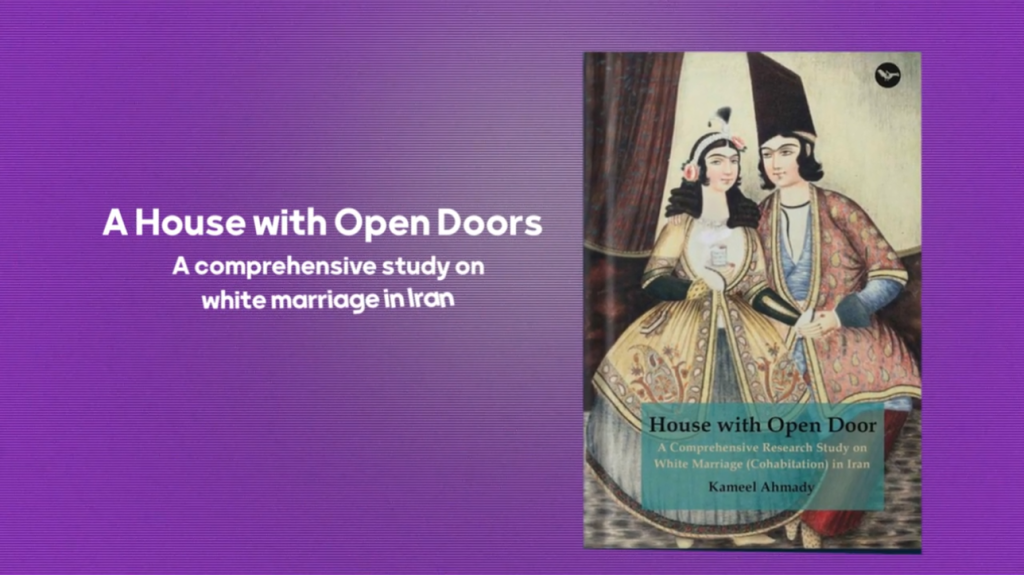
Cohabitation in Iran
This page introduces Kameel Ahmady’s research on cohabitation in Iran, discussed in the linked publications as ‘white marriage’. The term describes couples living together outside a formal marriage in the context of this research.
Research and Terminology
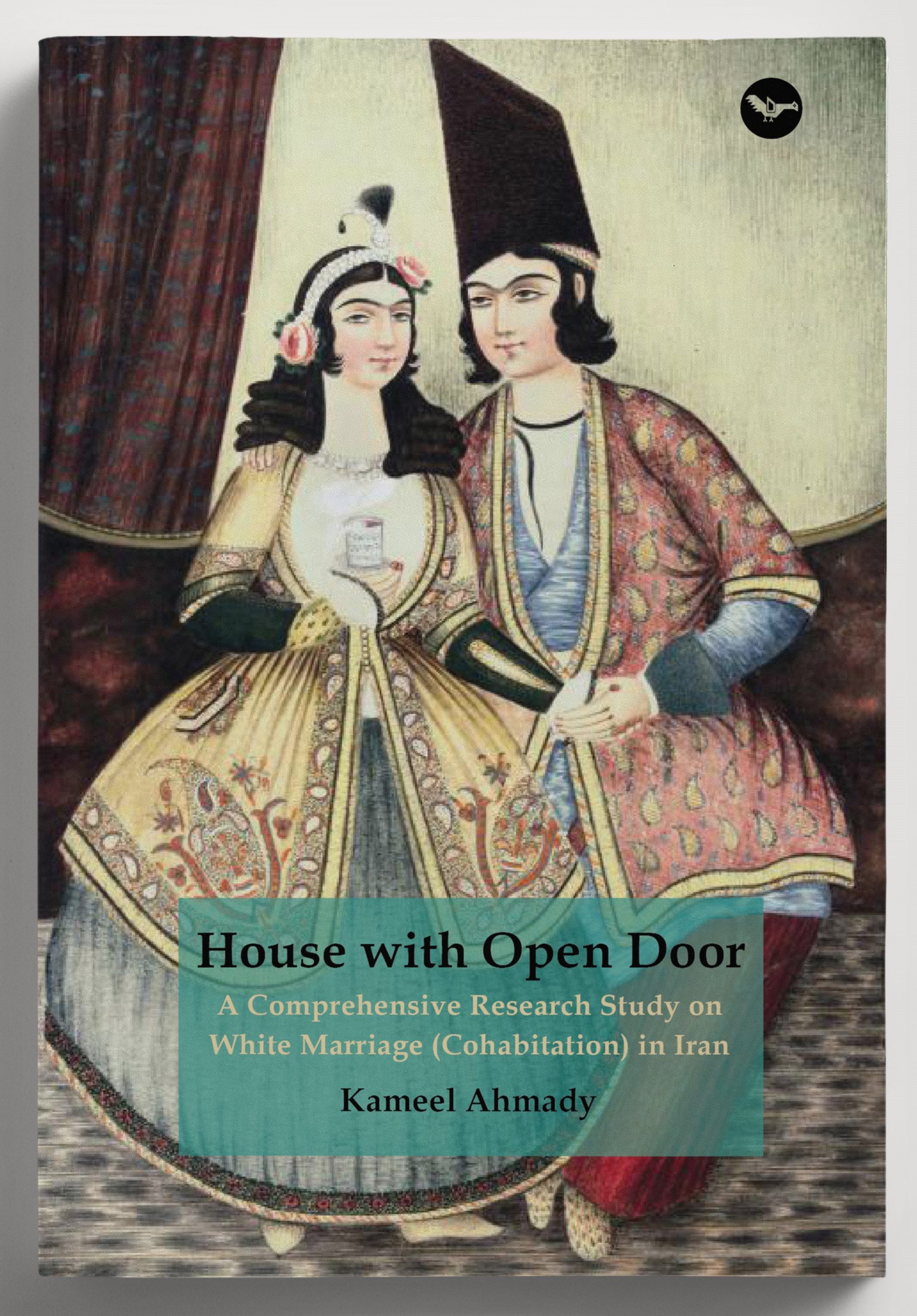
House with Open Door examines cohabitation through in-depth interviews, with a focus on Tehran, Mashhad and Isfahan. Its use of ‘white marriage’ should be read in that setting; the phrase can have different meanings elsewhere.
Cohabitation and temporary marriage are separate subjects in the research. The titles House with Open Door and A House on Water refer to different books.
Participants’ Experiences
The study explores accounts of housing costs, employment, personal choice, relationships and expectations about marriage. Participants may describe different motivations and experiences. Interview themes should not be turned into universal claims about women, men or young people in Iran.
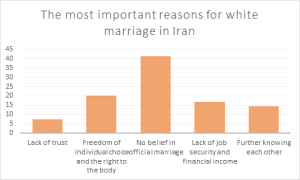
Chart reading note: The five visible categories are lack of trust; freedom of individual choice and the right to the body; no belief in official marriage; lack of job security and financial income; and further knowing each other. “No belief in official marriage” has the tallest bar. Units, sample size and exact bar values are not labelled, so none are inferred.
The original chart is retained here as part of the page’s research material. Interpret it alongside the study’s sample, questions, dates and denominator; it is not presented as a current national estimate.
Reading the Findings
In-depth interviews can illuminate experiences and meanings. They do not, by themselves, establish national prevalence, growth rates or the effect of a single cultural influence. Findings from particular cities and participants need to remain tied to their study design.
Social and Legal Questions
The book discusses secrecy, social expectations and concerns about protection and recognition. Such research themes need to be distinguished from a statement of current law. Any claim about offences, penalties, inheritance, children’s registration or other legal rights requires an authoritative source and careful attention to the circumstances.
Books and Related Publications
Begin with House with Open Door for the cohabitation study. The original listings below also contain related work on temporary marriage, marriage attitudes and child marriage; check each title and publication record before combining their findings.
References and Further Reading
- Kameel Ahmady, House with Open Door.
This book is also available in Farsi and Kurdish. Follow the edition pages for publication and download details.
search
Articles
A house on water
Young People Attitude Towards Marriage with a Focus on Law, Religion and Custom
Changing attitudes of Present Generation Towards Marriage in Iran
The Role of Temporary Marriage (TM) in Promoting Early Child Marriage (ECM) in Iran – Book Chapter (Temporary and Child Marriages in Iran and Afghanistan) Chapter 3 (P 63-84)
Attitudes of Present Generation Towards Marriage with a Socio-cultural Focus
A house on water
Related Content
About the Researcher
Kameel Ahmady is a British-Iranian researcher working in the field of social anthropology, with a particular focus on gender, children, ethnic minorities, and child labour. Kameel was born in Iranian Kurdistan (also known as East Kurdistan). He obtained his Master’s degree in Social Anthropology and Visual Ethnography from the University of Kent, UK. His academic pursuits include specialized courses in Middle Eastern Politics and Research Methods from other British institutions. Known for studying harmful traditions, Ahmady serves as both a supervisor and developer for his teamwork research publications in Farsi, Kurdish, and English. In 2017, he was honoured with “Honour” prize by the UK based IKWRO organization at the University of Law in London. Subsequently, in 2018, at George Washington University, Global P.E.A.C.E. foundation bestowed upon him the “Literature and Humanities” award in recognition of his contributions to the field. Among his group works are titles such as ” Conformity and Resistance in Mahabad,” ” Another Look at East and Southeast of Turkey,” “In the Name of Tradition,” “A House on Water,” “The Echo of Silence,” ” Traces of Exploitation in Childhood,” and more….
Articles





FAQ About White Marriage
- What does ‘white marriage’ mean on this page?
The linked research uses it for couples living together outside a formal marriage. The term is explained within the Iranian setting studied.
- Is it the same as temporary marriage?
The project treats cohabitation and temporary marriage as different research subjects, with separate books and publications.
- Do interview findings describe all couples in Iran?
No. Interpret accounts in relation to the participants, locations, fieldwork dates and methods of the particular study.
- Where can I read the cohabitation book?
See House with Open Door, linked above, for its introduction, editions and access information.
- Does this overview establish current legal rights or penalties?
It does not establish current legal outcomes. Legal claims require authoritative sources and attention to the circumstances; they should be distinguished from participants’ experiences and the researchers’ analysis.
White marriage can be a challenging situation for individuals involved, as it often lacks the emotional and romantic aspects that are important for a healthy, fulfilling relationship.
In some cultures, white marriage is a temporary arrangement, and couples may eventually transition into a more traditional marriage once certain conditions are met.
It’s important to understand that white marriage is not a one-size-fits-all concept and varies widely based on cultural norms, personal choices, and individual circumstances.
White Marriage can refer to a marriage where the couple lives together but does not have sexual relations or emotional intimacy, often due to societal or cultural pressures.