
 Farsi (فارسی)
 Kurdish (کُردی)


Temporary Marriage in Iran
This page introduces Kameel Ahmady’s research on temporary marriage in Iran, including A House on Water and related papers. In these publications, terms such as sigheh and mut’ah refer to fixed-term marriage arrangements; their use should be read within the study’s social and religious context.
Research Scope
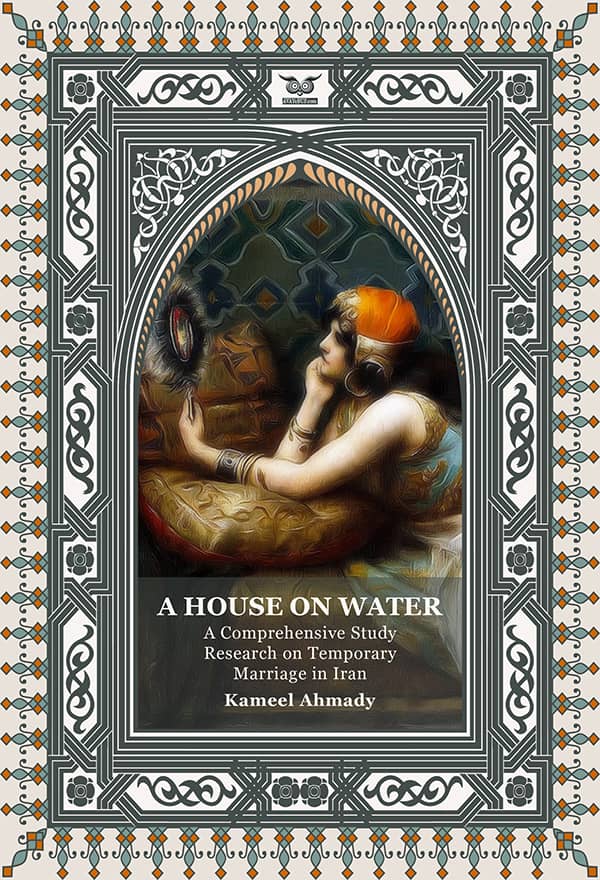
A House on Water examines temporary marriage with a focus on Tehran, Mashhad and Isfahan. It discusses experiences, social expectations and questions affecting adults and children. Read each finding alongside the participants, locations, fieldwork dates and methods of the relevant publication.
Participants’ Accounts and Analysis
The research examines differing accounts of temporary marriage, including motivations, stigma, family relationships and concerns about women’s and children’s rights. Participants’ views, the researchers’ interpretations and independently established legal provisions are different forms of evidence and need clear attribution.
Descriptions of individuals’ experiences should not be presented as the views of all Iranian women, men or members of a religious community.
Temporary Marriage and Child Marriage
Related publications investigate connections between temporary marriage arrangements and early marriage. An Echo of Silence provides a separate route to the child-marriage research. Evidence about particular cases or pathways does not establish that one factor explains every child marriage.
Social Practice and Legal Interpretation
The book raises questions about registration, financial arrangements, family responsibilities and protection. Those research questions should not be treated as a current legal checklist. Claims about validity, consent, guardianship, waiting periods or termination require authoritative legal sources and attention to differing interpretations and circumstances.
Books and Related Papers
Start with A House on Water and the original publications below. The separate Cohabitation page introduces research on ‘white marriage’; it should not be confused with temporary marriage.
References and Further Reading
- Kameel Ahmady, A house on water.
This book is also available in Farsi and Kurdish. Follow the edition pages for publication and download details.
search
Articles
Temporary Marriage an Approved Way of Submission
House with Open Door
Changing the Attitude of Young People Towards Marriage with a Focus on Law and Environmental Conditions such as Religion and Custom
Pathological Analysis of Mut’ah or Temporary Marriage in Iran
The phenomenon of temporary marriage (‘TM’) and its role in promoting early child marriage (‘ECM’) in Iran
The Role of Temporary Marriage (TM) in Promoting Early Child Marriage (ECM) in Iran – Book Chapter (Temporary and Child Marriages in Iran and Afghanistan) Chapter 3 (P 63-84)
Temporary and Child Marriages in Iran and Afghanistan
Attitudes of Present Generation Towards Marriage with a Socio-cultural Focus
Feminization of Poverty -The Cause and Consequence of Early Childhood Marriages in Iran
The Nexus between the Temporary Marriage and Early Child Marriages
Related Content
Motion Graphic of a House of Water
What is Nikah Mutah in Islam and Iran
A house on water
Temporary and Child Marriages in Iran and Afghanistan
A Comprehensive Study on Sigheh Mahramiat and Temporary Marriage in Iran
The Suppress Role of Religion and the Dominancy of Culture in Temporary Marriage of Children and Teenagers
The Effects of Temporary Marriage on Children
Book lunch – temporary marriage- 2018 Tehran- Iran
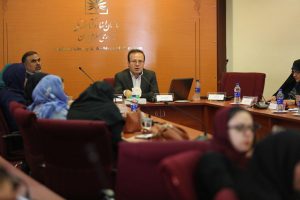
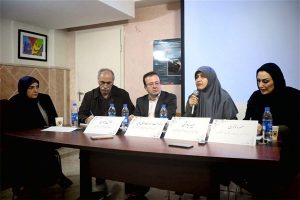
Seminar on temporary marriage at national library of Tehran, 2017
About the Researcher
Kameel Ahmady is a British-Iranian researcher working in the field of social anthropology, with a particular focus on gender, children, ethnic minorities, and child labour. Kameel was born in Iranian Kurdistan (also known as East Kurdistan). He obtained his Master’s degree in Social Anthropology and Visual Ethnography from the University of Kent, UK. His academic pursuits include specialized courses in Middle Eastern Politics and Research Methods from other British institutions. Known for studying harmful traditions, Ahmady serves as both a supervisor and developer for his teamwork research publications in Farsi, Kurdish, and English. In 2017, he was honoured with “Honour” prize by the UK based IKWRO organization at the University of Law in London. Subsequently, in 2018, at George Washington University, Global P.E.A.C.E. foundation bestowed upon him the “Literature and Humanities” award in recognition of his contributions to the field. Among his group works are titles such as ” Conformity and Resistance in Mahabad,” ” Another Look at East and Southeast of Turkey,” “In the Name of Tradition,” “A House on Water,” “The Echo of Silence,” ” Traces of Exploitation in Childhood,” and more….
Articles






Related Content



FAQ About Temporary Marriage
- What is the focus of this page?
It brings together research on temporary marriage in Iran, with routes to the associated book, papers and media.
- Which book should I start with?
A House on Water introduces the temporary-marriage study. Check its edition details and the methods of individual publications when comparing findings.
- Does the research describe every person or religious community?
No. Accounts and analysis need to remain tied to the participants and settings studied. They should not be generalised to everyone in Iran or a religious community.
- How does this relate to child-marriage research?
Some linked publications examine connections between temporary marriage arrangements and early marriage. Read their evidence and scope alongside An Echo of Silence.
- Is this page a legal or ceremonial checklist?
The overview presents research. Current requirements, rights and legal outcomes need authoritative sources and case-specific interpretation.
- Is temporary marriage the same as cohabitation?
They are separate subjects in the project. A House on Water concerns temporary marriage; House with Open Door concerns cohabitation.
What are the ongoing debates and discussions within Islamic scholarship and the wider society regarding the ethical, moral, and practical aspects of temporary marriage, and how are these discussions evolving over time?
Discussions surrounding temporary marriage often touch upon broader themes of religious interpretation, gender rights, and cultural norms, making it a complex and polarizing topic.
How do gender dynamics and power imbalances play a role in temporary marriages, and what safeguards can be put in place to protect the rights and interests of both parties?
The practice varies in its acceptance and prevalence across different Muslim-majority countries, with some nations banning it and others permitting it under certain conditions.
While temporary marriage can offer a degree of flexibility for individuals who face challenges with traditional marriage, it is not universally accepted and is viewed as controversial within Islamic communities and beyond.